
La-on Nan Rian-Ruu-Rakpaa (Nan Youths Learn-Know-Love the Forest), towards sustainable development
“The “La-on Nan Rian-Ruu-Rakpaa (Nan Youths Learn-Know-Love the Forest), towards sustainable development” project, led by the Center of Learning Network for the Region in collaboration with the Faculty of Science, addresses environmental literacy to combat biodiversity loss and climate change through collaborative efforts among Chulalongkorn University, local schools, communities, and local administrative organizations.
Diverse activities such as ecological knowledge training on forest study methodologies, carbon storage calculations, and report writing were implemented, followed by implementation of Independent Study (IS) projects. Thanks to community involvement, 18 permanent plots in the community forest were established, and 70 IS projects were produced. All findings were transferred to the local administrative organizations for future use. Annual academic conferences to enhance student presentation skills were organized. This project inspired students to continue environmental study at the university level. Recently, this integrative learning approach has expanded to Saraburi and Trang provinces to promote sustainable development goals.”
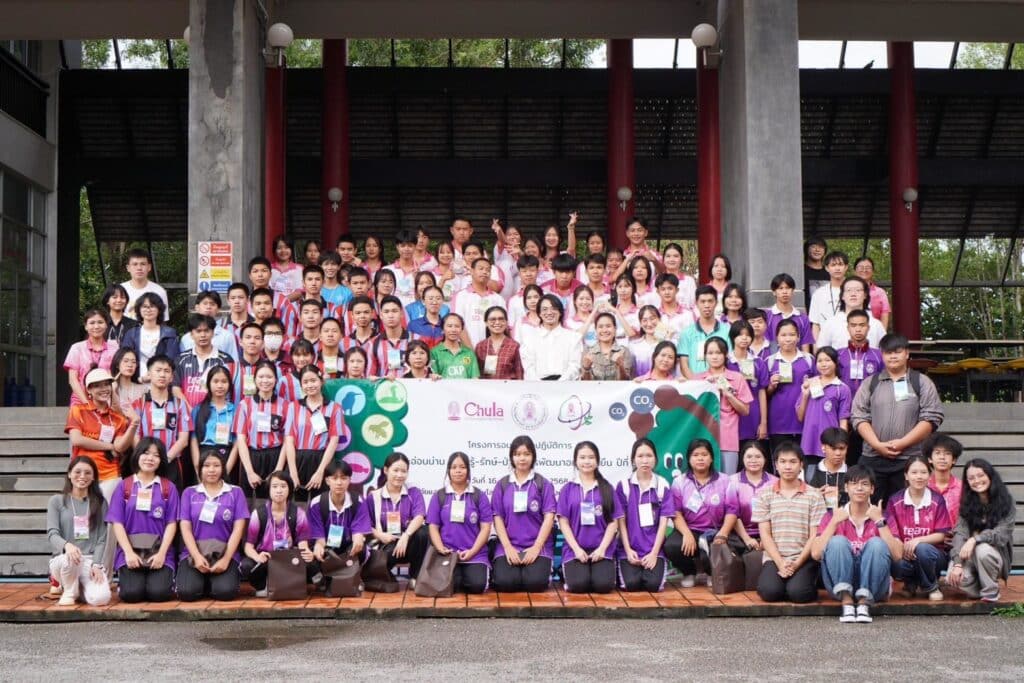
Environmental literacy is necessary to combat the issues of biodiversity loss and climate change. Consequently, the Center of Learning Network for the Region has been implementing a project entitled “La-on Nan Rian-Ruu-Rakpaa” (Nan Youths Learn-Know-Love the Forest), towards sustainable development”. Instructors from the Department of Biology, Faculty of Science, have initiated the learning process engaging schools (teachers and students), communities, local administrative organizations, and universities (professors and undergraduate/graduate students).
The primary educational activities consist of:
1. Ecological knowledge training: Undergraduate and graduate students, along with instructors from the Faculty of Science at Chulalongkorn University, facilitate training sessions on pertinent subjects, including permanent plot establishment, forest ecosystem study methodologies, Google Earth Pro, carbon storage calculations in forest ecosystems, organizational carbon footprint assessments, and report writing.
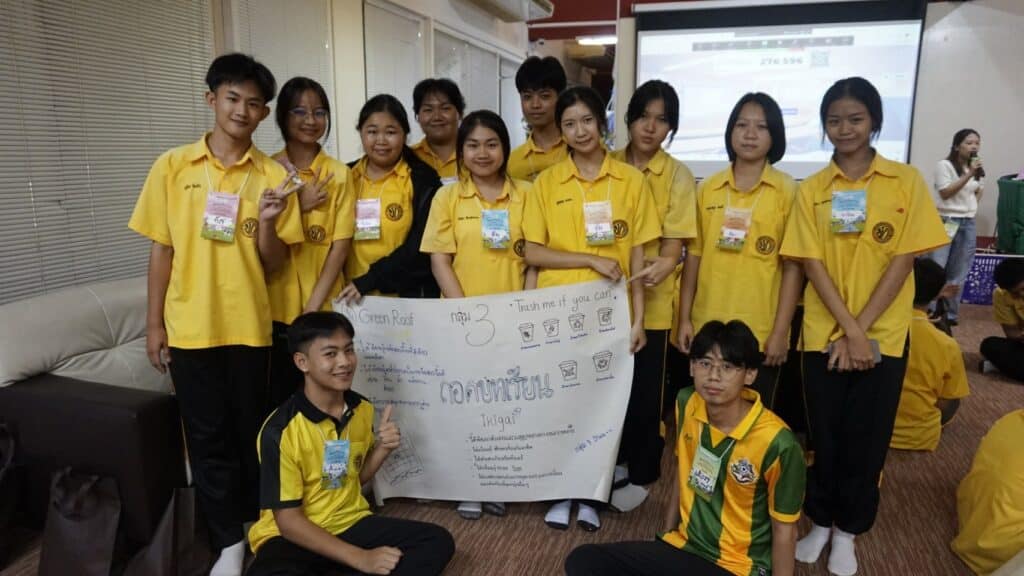
2. Establishing permanent plots and implementing Independent Study (IS) projects: Students apply their acquired knowledge into practice for forest ecosystem conservation by establishing permanent plots in community forest areas and conducting IS, a project-based learning approach that helps students develop 21st-century learning skills. Community members and local government officials participated in data collection and dissemination of local knowledge.
3. Organizing academic conferences and student presentations: This activity enables students to improve their oral and poster presentation skills, disseminate their research findings to the community, build self-esteem, increase understanding of the value of science education, and motivate students to continue their education in higher education.
The ongoing implementation of the project has led to the establishment of 18 permanent plots with trees’ names, coordinates, and carbon storage data. Local people and local administration managers can utilize these plots and data for education, conservation efforts, and carbon credit campaigns. A total of 70 independent research projects in the fields of ecology, geographic information technology, socioeconomics, and educational materials were produced. These include games and simulations for learning about ecosystem conservation and management, such as gaming and simulations on climate change adaptation, and herptile diversity conservation in agro-ecosystems. These games have been used in related natural resource management courses at the university and secondary school levels. Moreover, students participating in the project have continued their studies at the university in faculties related to the environment and technology. Additionally, there are academic conference proceedings, which serve as a source of information for future IS research. The learning approach from this project has been extended to the Saraburi and Trang provinces.
In summary, La-on Nan project supports sustainable development goals in diverse aspects, including improving the quality of local education, preserving terrestrial forests for biodiversity conservation, preparing for climate change mitigation and adaptation, and establishing a network for forest management among diverse groups of stakeholders.
By
- Center of Learning Network for the Region, Chualongkorn University
- Faculty of Science, Chualongkorn University




Others







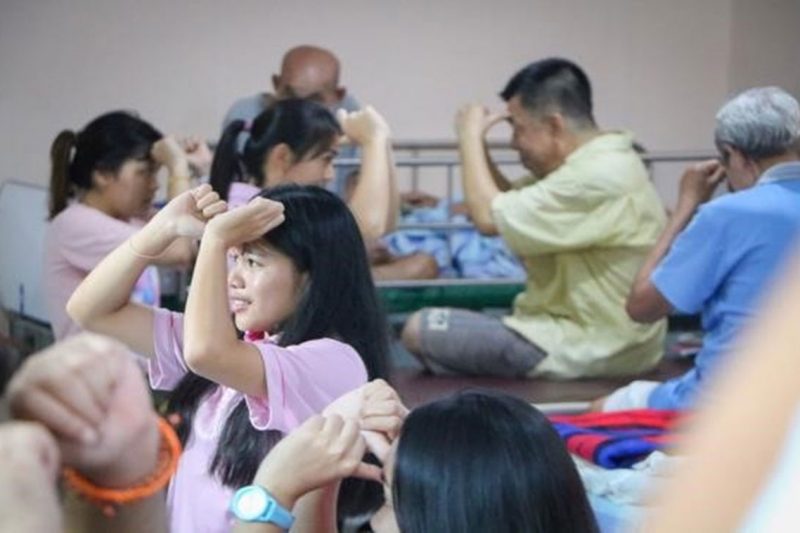
Sports Science for the Community
Volunteers bring knowledge about effective exercise programs to young and old alike